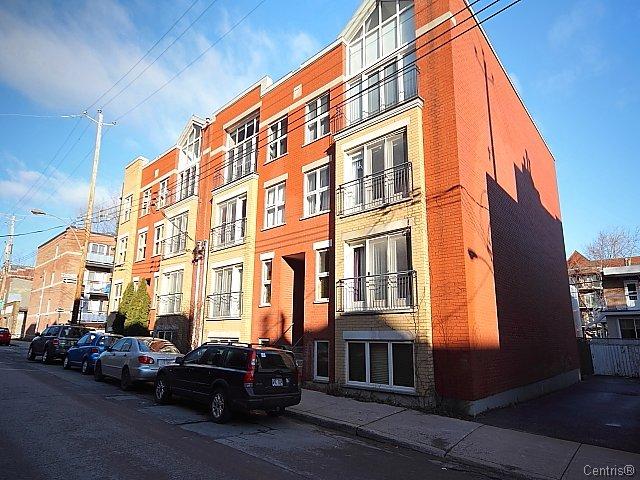
Showing posts with label divided. Show all posts

Tuesday, November 21, 2017

Divided vs Undivided Co-ownership, Part Deux

Time to take another look at the differences between divided co-ownership and undivided co-ownership. First-time buyers and buyers from outside Quebec tend to use the terms interchangeably. It's a good idea to be clear about what we mean when we talk about these two popular housing types.

Let's start with Divided Co-Ownership.

More commonly known as a condo. When you buy this, you own 100 per cent of your dwelling.  
A condo has it's own distinct lot number. In Quebec, it's called a cadastral designation. Whatever the address, or whoever the owner, the cadastral number is the one used by notaries, banks, the city tax department and other official agencies to identify your property. It is found on the certificate of location, the survey plan that shows the footprint of your condo within your building. Other cadastral numbers might also be associated with your condo, for instance if you have a balcony, or share a corridor with your neighbours, or have a garage space or storage locker.  Usually, these are common areas or common areas for which you have exclusive use. 

A condo has its own tax bill. Your bill is mailed directly to you to pay. Generally speaking, the taxes are higher on a condo than they are on an undivided property of similar size and quality. 

A buyer can usually put down a minimum down payment of five per cent on a condo. There can be exceptions. If the bank has concerns about your ability to pay a mortgage, they might ask you to put down a bigger down payment. If you are a foreign buyer, they will often ask for 35 per cent down.
Buying a condo you are free to deal with whichever lender you like. 

Because you own your specific unit, you are free to rent it out, as long as rentals are permitted in the building. (This is a big one. We'll get into it more when discussing undivided condos.)
 Now for Undivided Co-ownership
When you buy an undivided co-ownership you are buying a fraction of a whole building. In a triplex, that usually means about 33 per cent of the building, in a duplex, depending on whether you have the top or the bottom, or whether there is a basement or not, you're buying a 45-55 per cent share of the building as a whole. In a large apartment building, the fraction would be smaller. 

Unlike a condo, your undivided property will not have its own lot number. There were will be one cadastral designation for the entire building.  There is also only one certificate of location for the entire building but each owner gets a certificate with the plan of each fraction shown. 

There's one tax bill for the entire building and the portion you pay is determined by the percentage of the building you own.  Undivided properties generally have a lower taxable value than divided properties of similar size and condition. That means lower taxes for the owners.

Prices for undivided co-ownership properties tend to be substantially lower than for condos of the same size and quality. This is because the down payment on an undivided is a minimum of 20 per cent. The pool of buyers able to put together 20 per cent down is substantially smaller than the pool of condo buyers. That tends to have a moderating influence on prices.
Only two banks will finance the purchase of undivided properties, the Caisse Desjardins or the National Bank of Canada. If you are buying into an existing undivided property, you must use the bank already holding mortgages on the property.  If you are thinking of converting your own duplex or triplex, you get to choose which of the two to use. Each bank works with specific notaries so you will either have to start by choosing the bank and then ask them to refer you to a notary, or, if you really like a particular notary, accept that you will have to work with the bank with which they are affiliated. Not all notaries do this kind of work.

Renting an undivided property presents a few risks. Quebec law is very clear. An owner who rents his or her undivided property has no automatic right to repossess from a tenant. So, if you are buying into a newly created undivided co-ownership and if there is a tenant already in place, you cannot force them to move. You can offer them an inducement but they do not have to go. This sounds crazy but it is true. Check property listing for older apartment buildings in Outremont, for example, and you will note that many of them are attractively priced but have tenants who are not going anywhere. 

Likewise, if you are hoping to rent out your undivided property you might be opening a can of worms. First of all, your mortgage agreement will likely forbid you to rent (because banks don't want to be stuck with tenants, either). If you don't have a mortgage and you rent, you might still find yourself stuck with a tenant who won't leave. You could get around this if you offer short-term rentals, instead of a standard lease. Be careful though, many buildings are wary of short-term rentals and the headaches they can bring.
In undivided buildings, co-owners have a right of first refusal. That means that when the property is put up for sale, the other owners are given an opportunity to buy it first. Often, the co-owners are given a second opportunity to buy once a promise to purchase from an outside buyer is accepted. They then have a chance to match the offer on the table. Co-owners who renounce their right of first refusal must do so in writing and within a set time frame.

For all the complications and quirks of undivided co-ownership, it does have one big advantage. It is much easier to turn a duplex or triplex (or any other multi-unit building) into an undivided co-ownership than it is to turn it into condos. 

All you need to do is ask a notary to prepare an indivision agreement. This agreement is a multi-page document that lays out who owns what, what the rules are, how decisions are made and other minutiae of owning. Next, a land surveyor must prepare a new certificate of location with a detailed plan of each floor or unit in the building. All of this can be accomplished in about two months and at relatively little cost. 

Turning a similar duplex, triplex or apartment building into condos is a much lengthier process and much more costly. 

Montreal has frozen condo conversions as a way of protecting the rental housing stock. (we can argue about how effective that has been.) If you want to convert a building where even one unit has been rented in the last 10 years, even if the unit is now empty, you must apply to borough for permission. Quebec's Rental Board will also want to know if any of the dwellings have been rented in the last 10 years. The owner must provide proof that all the tenants have been advised of the conversion plan. Once those steps are undertaken, the city and the province must give authorization. This can take six months to grind its slow way through the gears of bureaucracy.

A land surveyor must prepare a new certificate of location and must apply to the Minister of Natural Resources for cadastral designations (lot numbers) for each divided unit. Are you dizzy yet?  Once all of that is done, a notary draw up a Declaration of Co-ownership. 

The process is long, complicated and costly. There are deadlines that can't be missed. Usually, lawyers specializing in real estate transactions are involved because the paperwork, the procedures and the all-important deadlines are not easy to navigate. 

As a final disincentive, in Montreal, some boroughs can and do impose what is known as a "park tax" when a building is converted into condos. This tax represents 10 per cent of the land value as stated on the property evaluation rolle. For a typical Verdun triplex, for example, that might mean $10,000 to $15,000.  That tax is payable before the permit to convert the property is issued.  

The good news is that it is easier and less costly for co-owners of an undivided property to convert to condo. It still takes time and will cost you money, but the park tax doesn't apply and the process is more streamlined. 

Do you have other questions about buying, selling or converting a property to divided or undivided co-ownership? Drop me a line of give me a call. I'd be happy to help. 


Monday, July 23, 2012

What If My Co-owner Wants to Rent Out His Flat?

One of the most popular posts on my blog is the one dealing with the differences between Properties Held in Divided Ownership Versus Undivided Co-Ownership

Here's the latest question. I thought it deserved its own entry. 

Hello,

I own the lower portion of an undivided co-property. The owner of the upper is moving and has has been trying to sell his section. Since he has not had any offers he is now considering renting. According to our co-prop agreement he requires permission from the institution with which he has a mortgage and from me. I do not feel comfortable having someone who is a tenant rather than an owner living above me. Therefore I do not want to give him permission. According to him he says that he does have the right to rent out his apartment regardless of any reason I give. Is this true? Can he challenge this if I don't want to give him authorization?

Thank you for any help

Hello Anonymous,

There are two issues. First, if the agreements says you must consent, then that should be the end of the story. I would hope that your neighbor would  drop the matter there.

The second issue has nothing to do with you but is equally germane and potentially waaaay more scary for your upstairs neighbor. What does the mortgage lender say? Generally speaking, lenders (and in Quebec that means either National Bank or Caisse Desjardins) do not allow owners of undivided co-owernship properties to rent their places out because there is no automatic right for a financial institution to repossess the unit, ie to get a tenant out. That makes it harder for them to sell if a borrower defaults on a mortgage.

You have the same mortgage lender, presumably. What does your mortgage say? If there is a prohibition against renting, it will be there in black and white. If your upstairs neighbor violates the terms of his mortgage the bank could, in theory, call the mortgage loan.

I would be surprised if he has the right to rent.I would be surprised if he would want to go up against his bank. That doesn't generally go well.

Hope this is helpful.

Wednesday, March 7, 2012

Divided versus Undivided, A Reader Asks about Taxes

MontReal Estate reader Sabrina read a post I wrote about the differences between divided and undivided properties. One of the most interesting differences about the two is that the property taxes on undivided properties are generally substantially lower on undivided than divided.

Sabrina wrote to ask how much of a difference there is. So here goes.

I can't give you a precise mathematical answer to the question, Sabrina. If you own a condo, your property taxes will be based on a formula the city works out every three years when it adjusts the property tax rolls.

For example, if you look at Plateau Mont Royal, the basic 2012 tax rate or mill rate is .8183 cents per $100 for evaluation if your unit is in a building with five units or less. Add to that .1403 cents per $100 of evaluation for water tax and a road improvement tax of .0047 cents per $100 of evaluation.

If you live in a condo, also known as a divided property, the city will base its evaluation on the value of your property alone, though the truth is that evaluations generally trail market values. Thank goodness.

If you have an undivided property, the property tax will be based on the value of the entire building and will be divided among the co-owners according to what percentage of the building they own. If your property is part of a triplex, that might work out to 31 per cent for the middle floor, 35 per cent for the ground floor and 34 per cent for the top floor. (The percentages can vary, depending on if the person on the ground floor also gets access to a basement, or whether the second floor is smaller than the third floor because of the staircase etc.)

Have I bored you to tears yet, Sabrina?

Here's a more visual illustration. I looked up four properties that sold within the last 6 months in the Plateau. All sold for between $345,000 and $350,000. Two are divided properties and two are undivided. Have a look.


Berri St. undivided. Sold $350,000.  Building evaluation $754,000. Ownership share = 30 per cent. Taxes= $2230.50


De Bullion St. divided. Sold for $350,000. Evaluation $343,000. Taxes= $3,965


Waverly St. undivided. Sold for $345,000. Building evaluation $510,300. Ownership share = 30 per cent. Taxes = $1567.


Henri-Julien Ave. divided. Sold for $350,000. Evaluation $270,3000. Taxes = $1,747.


As you can see, there can be wide differences in property taxes, depending on whether your evaluation is low or high. A low evaluation today will be corrected next time the property rolls are updated. The one thing that doesn't change is that the taxes on an undivided property are lower than those on a divided property that sells for the same price.

 I hope that helps, Sabrina. Thanks for writing!


Wednesday, June 30, 2010

Divided Versus Undivided Co-Ownership, What's the Difference?

I'm working with a new client ready to buy his first property.  He said he was looking for a condo, but I've come to realize that buyers throw that term around without knowing what it means.
In Quebec, there are two kinds of shared ownership properties: undivided co-ownerships and divided co-ownerships. People tend to use the word condo to mean both but they are distinct and there are things a buyer should understand about each before purchasing.
When buying into an undivided co-ownership property, you are, in fact, buying a share in a property as a whole. In a triplex, that typically means that you are buying about 33 per cent of the roof, foundation, walls and yard. You are given exclusive use of a portion of the property but you are essentially a shareholder in the whole.  The property has one tax account, divided among the owners according to their share of the property. One of the big advantages to this kind of ownership is that property and school taxes are substantially lower.
Undivided co-ownerships have their own particularities. 
As a rule of thumb, asking prices for undivided properties are lower than those for divided properties of similar size and with similar features. That's because buyers are obliged to provide a larger down payment when buying into an undivided property, 20 per cent down, versus the usual minimum 5 per cent.
Only two lenders will mortgage them: The National Bank and the Caisse Populaire. You can't choose, the lender will already be in place when you make an offer to purchase.
The third thing about undivided properties is that you have no automatic right to occupy the premises. Whaaaa?  It's true. If you lease your "apartment" in an undivided co-ownership building, Quebec law says that you cannot then reclaim it unless the tenant agrees to go.  It is equally true that if a rental building is turned into a undivided co-ownership property, the tenants cannot be turfed out, regardless of how many months notice they are given, or how much money you offer them as an inducement to leave.
For this reason, many undivided properties have clauses in their co-ownership agreements that forbid owners from leasing their properties.
Life is much more straightforward with a divided co-ownership property. Properly, this is what people mean when they talk about condos.  You own your unit, its walls, floors and ceilings. Your tax bill will be higher, because it will more closely reflect the market value of your individual unit. This kind of ownership is relatively new in Quebec. It only became possible to divide a property after the Quebec Civil Code was revised by the National Assembly in 1969.
Unlike an undivided, the down payment can be as low as 5 per cent and you can seek a mortgage with any lender you like.
Which is the better option? There is no easy answer. For some people, substantially lower tax bills trump all other considerations.  For others, there is a clean, simple logic to owning a unit, versus a share in a property.
The main thing is to consider what you're buying into. Read the co-ownership agreement. It will be so very booooooooooooring, but you'd be a fool not. A good agent will read it too, and advise you on potential problems. Are dogs allowed or not? Are carpets mandatory, or can you have hardwood floors? Are window boxes okay? Who has use of the yard or the basement? How much is each owner required to contribute to the reserve fund. All will be spelled out in a well-written co-ownership agreement.
Also read the minutes to the last two or three annual meetings of the co-owners. These will give you an idea of the issues and possible conflicts in the building. Examine the financial statements so that you know what big bills may be coming due and how much money is in the reserve fund.